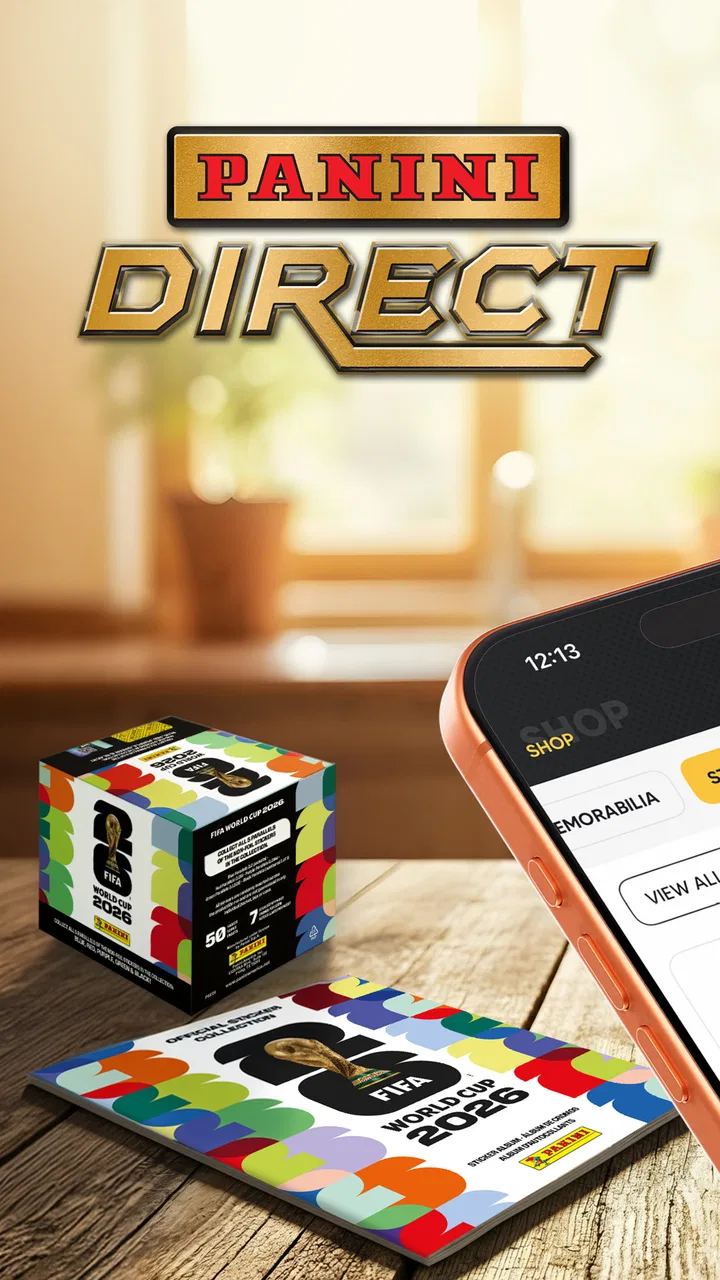
Panini Direct
- 3.2
- Rating
- 100.00K
- Installs
- Free
- Price

 Analysis by App-foxy
I approached Panini Direct as a practical shopping companion for collectors rather than as a general sports app, and that distinction shapes my opinion of it. Developed by Panini America Inc., this free Sports app is aimed at people who already care about trading cards, sealed products, and the excitement of following Panini’s releases. It is not trying to replace a full collection manager, a marketplace, or a social network. Its value is more focused: it brings Panini’s official purchasing experience into a mobile format.
That focus is both its best quality and its biggest limitation. When I wanted a direct route to Panini products, the app made more sense than browsing unrelated shopping platforms. When I wanted detailed collection organization, price research across sellers, or a broad view of the entire card market, I found myself needing other tools. My overall view is positive for committed Panini collectors, but much more cautious for casual sports fans who only occasionally buy cards.
What using Panini Direct feels like in everyday collecting
The first thing I noticed is that the app works best when I already know what kind of product I am looking for. A collector checking for a particular sport, product line, or release can use it as a direct starting point instead of searching through a general retailer. That reduces one common source of frustration: sorting through unrelated listings, unofficial sellers, and search results that mix new stock with secondhand products.
You May Also Like

 Pandora - Music & Podcasts
Pandora’s Music Is Easy to Start, but Harder to Recover
Pandora’s strength is its low-effort path from a seed to a station. Its weak spot is how much confidence it asks you to place in connection, setup, and quiet recovery.

 AccuWeather: Weather Radar
AccuWeather Review: A Quick, Clear Forecast for Everyday Decisions
For everyday plans, the best forecast is the one you can understand quickly. AccuWeather makes rain timing, radar, and local conditions easy to act on, with a few trade-offs.

 Hill Climb Racing
Why Hill Climb Racing Still Turns Crashes Into One More Run
A tiny car, a bumpy hill and one more upgrade: Hill Climb Racing keeps resurfacing because its simple chaos makes every near-miss feel personal.

 AliExpress - Shopping App
AliExpress Makes Global Shopping Feel Personal, but Shoppers Bear the Risk
AliExpress turns a global marketplace into a pocket-sized discovery engine. Its reach is useful, its shopping loop compelling, and its trade-offs easy to miss.

 Lords Mobile: Kingdom Wars
Lords Mobile Is a Kingdom-Building Routine, Not a Quick Match
A case-by-case verdict on the building, battles, device demands, and social commitments that make Lords Mobile rewarding for some players and exhausting for others.

 PDF Scanner app - TapScanner
TapScanner Makes Paperwork Easier to Capture, Check, and Share
TapScanner makes scanning with a phone feel less like a rescue operation and more like a dependable step in getting work done. Its capture tools are useful, though not flawless.
More From Our News Desk
View All News


In a realistic everyday situation, I might open the app during a lunch break after seeing discussion about an upcoming Panini release. Rather than waiting until I am home at a computer, I can use the phone to check what is available through the official channel and decide whether it is worth returning to later. That mobile convenience matters because collecting decisions are often made quickly, especially when a product attracts attention.
I also found the official angle reassuring. Buying through an app associated with Panini America Inc. gives the experience a clearer connection to the manufacturer than purchasing from an unknown seller. That does not automatically make every purchase the right one, and I would still read product details carefully, but it gives the app a useful role in the buying process.
The app is free to install, which makes trying it low-risk. Its content rating is Everyone, so it is presented as suitable for a broad audience. That does not mean every product decision is equally suitable for every household: trading cards involve spending choices, and younger users may still need an adult to handle purchases. The rating simply reflects the app’s general audience rather than the financial judgement required when buying collectible products.
Panini Direct has a relatively established presence, with over one hundred thousand installs and an average rating of 3.2 from around one thousand six hundred ratings. I read that combination as a useful warning to set expectations. There is clearly enough interest for the app to have a meaningful user base, but the rating is not so strong that I would recommend installing it without considering its limitations.
The strongest reason to use it is the direct connection to Panini products
The app’s clearest strength is that it narrows the distance between a collector and Panini’s own catalog. General shopping apps are convenient, but they often make the buyer compare sellers, interpret inconsistent descriptions, and decide whether a listing is official or secondary. A manufacturer-focused app has a simpler purpose, and that simplicity can be valuable when I want to investigate Panini products without the noise of a broad marketplace.
This is especially helpful for collectors who follow more than one sport. Instead of treating the app as a single-team tool, I would use it as a central place to browse Panini’s wider sports-card output. That makes it more useful than a team-specific fan app, which may provide scores and news but does not serve the same purchasing purpose.
Another practical advantage is the ability to separate product discovery from collection tracking. I would not assume that installing the app means my entire personal inventory is automatically organized. Instead, I see it as the place where I discover official products and make buying decisions, while a spreadsheet, notebook, or dedicated collection service can remain responsible for what I already own.
That division of responsibilities is one of the most useful ways to approach the app. Collectors often try to make one tool do everything: discover releases, compare prices, record duplicates, estimate values, and manage trades. Panini Direct is better understood as one part of that workflow. Its official shopping focus can be a strength precisely because it does not need to pretend to be a complete replacement for every other collecting tool.
I also appreciate the convenience of using a phone for browsing. Card collecting is a visual hobby, and a mobile interface is naturally suited to checking product imagery and moving through listings while away from a desktop. I would use it before a card show, during a conversation with another collector, or when deciding whether a product deserves further research. The app is most useful as a quick access point, not as a long research session.
Where the experience becomes less convincing
The central weakness is that an official store is not the same thing as an independent buying guide. Panini Direct can help me find Panini products, but it does not remove the need to think carefully about value, format, odds, resale expectations, or whether a sealed product fits my collecting goals. Anyone hoping the app will tell them which purchase is smartest may find the experience too narrow.
This matters because trading cards are not ordinary household goods. A collector may be choosing between opening packs, keeping a box sealed, buying individual cards, or saving money for a specific release. The app can support the first stage of that decision, but I would still compare the product with specialist retailers and secondary-market listings before spending. The official route may be the most comfortable option, but comfort should not replace price awareness.
I also would not use it as my only source for market research. A general marketplace can show how sellers are pricing individual cards, while collector communities can reveal how products are being received. Those alternatives have their own problems, including inconsistent sellers and unreliable opinions, but they provide context that a direct brand app is not designed to supply.
The user rating reinforces that caution. With a 3.2 average based on around one thousand six hundred ratings, the app appears useful to some people but not consistently satisfying for everyone. I would not treat that score as proof that the app is poor; shopping apps can receive criticism for issues that affect only certain devices, releases, or account situations. Still, it tells me to keep expectations realistic and to avoid depending on the app alone for an urgent purchase.
There is also a psychological trade-off in using an official store. The direct connection can make a purchase feel more trustworthy, but it may also encourage impulse buying when a product looks appealing. I recommend deciding on a spending limit before opening the app, especially when browsing sealed products. That small habit is more important here than any visual convenience because the app’s purpose naturally puts products in front of a collector who may already be excited.
Three ways I would make the app more useful
My first tip is to use Panini Direct for discovery, then pause before buying. I would note the product name, format, and intended use, then compare it with at least one independent source. This workflow keeps the app’s official catalog advantage while avoiding the mistake of treating the first available option as automatically the best deal.
My second tip is to separate collecting goals before browsing. If I am building a personal collection, I would decide whether I care about a particular player, team, set, design, or sealed product. If I am buying for the enjoyment of opening packs, I would judge the purchase differently from someone trying to obtain specific cards. The app becomes easier to use when I know which of those goals I am serving.
My third tip is to record purchases outside the app immediately. A simple note with the product, date, and amount paid can prevent duplicate buying and make later organization easier. This is a small but valuable workaround because an official shopping app should not automatically be treated as a complete inventory system. Keeping a separate record also helps me see how often I am buying rather than relying on memory.
A fourth useful habit is to check the app when I have a clear reason, not simply when I am bored. Casual browsing can be enjoyable, but it can also turn collecting into repeated impulse decisions. I would open it to investigate a product, follow a planned purchase, or check for something specific. That makes the app serve my collection instead of directing my collection habits.
Finally, I would keep another option available for individual cards. If I know exactly which card I want, buying a sealed product through an official store may be less efficient than searching for the single card through a specialist seller or established marketplace. Panini Direct is strongest when the product itself is what I want to explore. It is less compelling when the real goal is one precise card.
Who should install it, and who should skip it?
I think the app is a good fit for collectors who regularly follow Panini releases and want an official mobile route to browse them. It is also useful for someone beginning to explore trading cards who prefers to start with the manufacturer rather than immediately entering a crowded resale market. The free download makes it reasonable to test, especially if Panini is already the brand the user intends to buy.
It may also suit parents or gift buyers who need a straightforward way to understand Panini’s products before making a purchase. I would still recommend learning the difference between sealed products and individual cards first, because the app cannot make that decision on the buyer’s behalf. A little preparation prevents the common mistake of buying something attractive without knowing whether it matches the recipient’s interests.
On the other hand, I would not make it the first choice for someone who wants live sports scores, team news, fantasy tools, or a broad fan community. Although it belongs to the Sports category, its purpose is collecting and shopping rather than following games. A sports news app or league-specific service would be much better for those needs.
I would also steer away from it if my main goal were advanced collection management. Someone with a large inventory may need detailed fields, duplicate tracking, trade lists, valuation history, and cross-brand organization. Panini Direct can sit beside that system, but I would not expect it to replace one. Likewise, a bargain-focused buyer who compares several retailers may prefer a browser and price-tracking routine over a brand-specific app.
Compatibility, maintenance, and the long-term question
The current version is 6.4.1, and the app requires Android 7.0 or later. That makes the minimum operating-system requirement relevant for anyone using an older phone. Before planning to rely on it for a purchase, I would check that the device is supported and that the app is running properly after installation.
The release history reaches back to May 8, 2017, which gives the app a longer background than a newly launched shopping experiment. For me, that is a modest positive: the concept has had time to exist as a dedicated Panini mobile product. At the same time, a long-running app still needs to feel current in daily use, and the middling rating suggests that longevity alone should not be confused with flawless execution.
I would judge its long-term usefulness by how naturally it fits into my collecting routine. If I buy Panini products often, a direct mobile channel can save time and make browsing more convenient. If I only buy a few cards a year, the app may not earn a permanent place on my phone. In that case, a normal browser visit or a trusted local card shop could be simpler.
The app’s free price also changes the decision. There is no purchase cost merely to try the interface, so I can evaluate whether it is convenient without committing money upfront. The real cost comes later, through the products I choose to buy. That makes personal discipline and comparison shopping more important than the installation decision itself.
My verdict after weighing convenience against control
Panini Direct succeeds when I treat it as an official Panini shopping and discovery tool, not as the complete operating system for a card collection. Its strongest evidence is practical: it gives Panini-focused collectors a direct mobile path to products and reduces the uncertainty that can come with browsing unknown sellers. For the right user, that is enough to make it worthwhile.
Its meaningful weakness is equally clear. It does not remove the need for independent research, collection records, or careful spending decisions. The moderate user rating means I would approach it as a useful convenience rather than an essential app. I would keep a second method for comparing prices and a separate system for tracking what I own.
My recommendation is therefore specific. If you already collect Panini cards and want a free, official mobile starting point, I think it is worth trying. Use it to discover products, verify that your interest is pointed in the right direction, and then make a deliberate purchase. If you want a complete market comparison tool, a detailed inventory manager, or general sports coverage, choose a different service and use this only when Panini’s own catalog is relevant.
Panini Direct is best for focused collectors who value official access more than all-in-one functionality. I would recommend it to that audience, with one condition: let the app simplify product discovery, but keep the final buying decision firmly in your own hands.
FAQs for Panini Direct
01What is Panini Direct and what can I do with it?
Panini Direct is an app designed for collectors and enthusiasts of trading cards and memorabilia. It offers users the ability to browse, purchase, and track various sports cards and collectibles directly from their mobile device. The app also provides updates on new releases and exclusive deals, making it a comprehensive platform for collectors.
02Is Panini Direct free to use, and are there any in-app purchases?
Yes, Panini Direct is free to download and use. However, it does offer in-app purchases as you can buy trading cards and collectibles directly through the app. Prices for items vary, and the app occasionally features exclusive deals and limited-time offers, which might require additional purchases.
03Can I track my orders through the Panini Direct app?
Absolutely, the Panini Direct app provides a seamless order tracking feature. Once you make a purchase, you can easily track the status of your order right from the app. This includes updates on shipping and delivery, ensuring that you stay informed about when your items will arrive.
04Is there a way to receive notifications about new releases and promotions?
Yes, the Panini Direct app allows users to enable notifications for the latest updates on new releases, exclusive offers, and promotions. This feature ensures that you never miss out on limited edition cards or special deals, keeping you at the forefront of the trading card community.
05How secure is the payment process on Panini Direct?
The Panini Direct app employs robust security measures to protect users' payment information. It uses encryption and secure payment gateways to ensure that all transactions are safe and confidential. Users can make purchases with confidence, knowing that their financial details are well protected.
Pros
- Wide range of collectible cards available.
- User-friendly interface for easy navigation.
- Regular updates with new card releases.
- Secure transactions for peace of mind.
- Personalized recommendations enhance experience.
Cons
- Limited availability of certain rare cards.
- Occasional app crashes during high traffic.
- Shipping fees can be relatively high.
- In-app notifications can be overwhelming.
- Requires stable internet connection.

Panini Direct
Gallery